Back to the overview
We have more where that came from! Go back to the overview to discover all articles.

During FTI Gent, business leaders explored every corner of the city: on October 28, the KMO Tech Tour took them behind the scenes at high-tech facilities turning “yes we can” into “this is how we do it.” Come along for the ride!
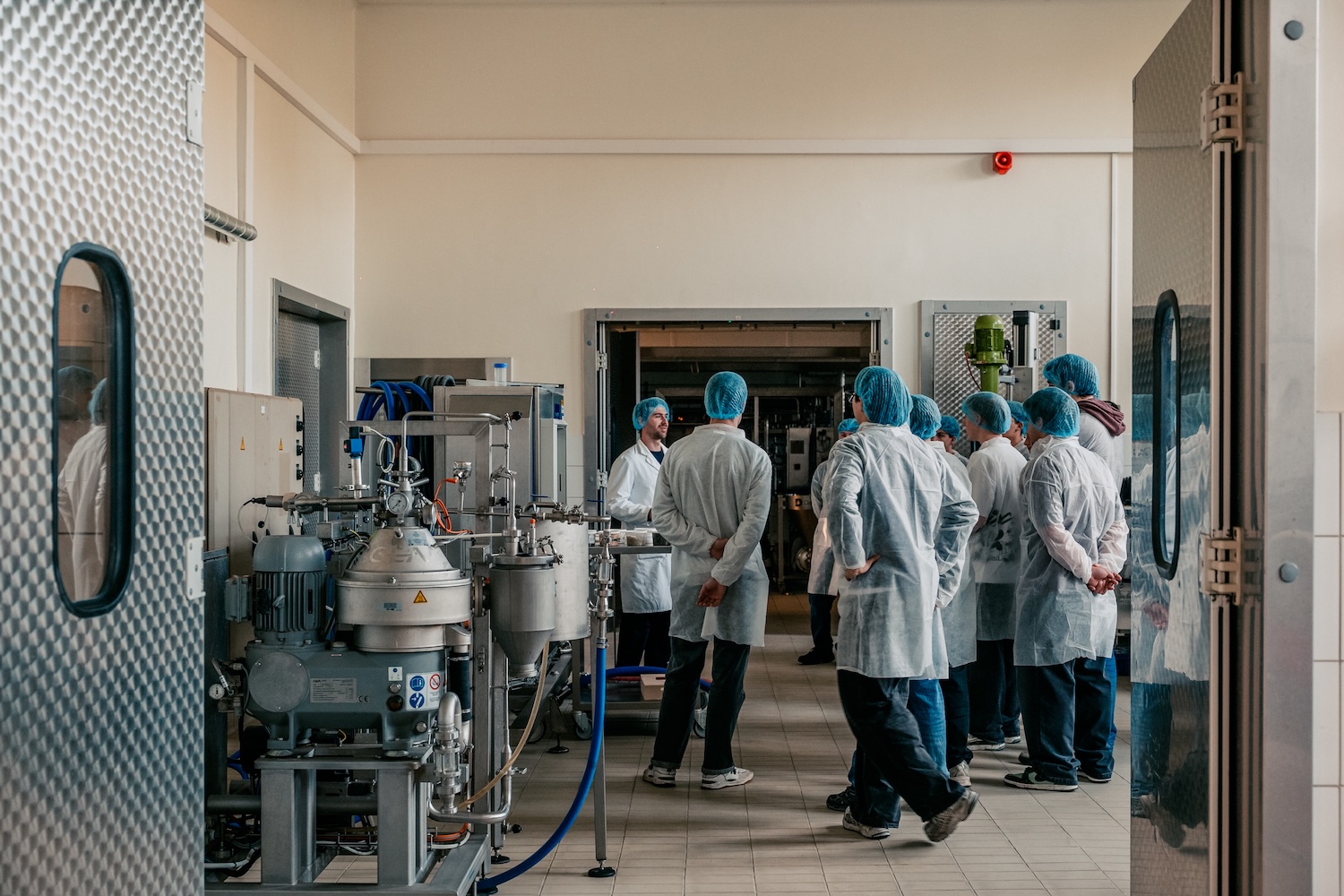
It’s not even 8:30 a.m. and the parking lot at Food Pilot is already filling up. Food innovation waits for no one, and neither do the frangipane tarts laid out for breakfast. Run by Flanders FOOD and the Flanders Research Institute for Agriculture, Fisheries and Food, the pilot plant is essentially a giant playground for anyone with a food business—or a recipe for one. From small startups experimenting in their kitchens to multinationals without all the equipment they need to test a new flavor or product.
The facility now houses around one hundred semi-industrial production machines, and they’re more versatile than you might think. “This separator, for example, is designed to remove meat from bones,” says project manager Nathalie Bernaert. “But we’ve also successfully used it to separate banana peels from the flesh. You have no idea how many bananas would otherwise go to waste in supermarkets.”
That’s part of the work here, too: finding new uses for existing technologies to tackle food waste. Still, most businesses come to Food Pilot to develop products, test shelf life, or fine-tune their production processes. And the machinery is only part of the appeal. “We’re all about collaborating,” Nathalie explains. “There’s an enormous amount of scientific expertise in this building, and we’re equally at home analyzing wine and extracting proteins.”
In fact, that’s one of the big trends keeping the facility busy these days: protein. “And demand for fewer additives, more plant-based products, and gentler processing techniques keeps growing, too. A lot of what’s in your shopping cart has been heat-treated. Now there’s a move toward gentler processes that improve food quality.”
Impressed? Apparently, so is AI. “We’re now getting inquiries from countries such as Australia and Kuwait,” Nathalie says, still sounding slightly surprised herself. Why? “ChatGPT seems to really like us, and quite a few companies are using it to find a pilot plant.”
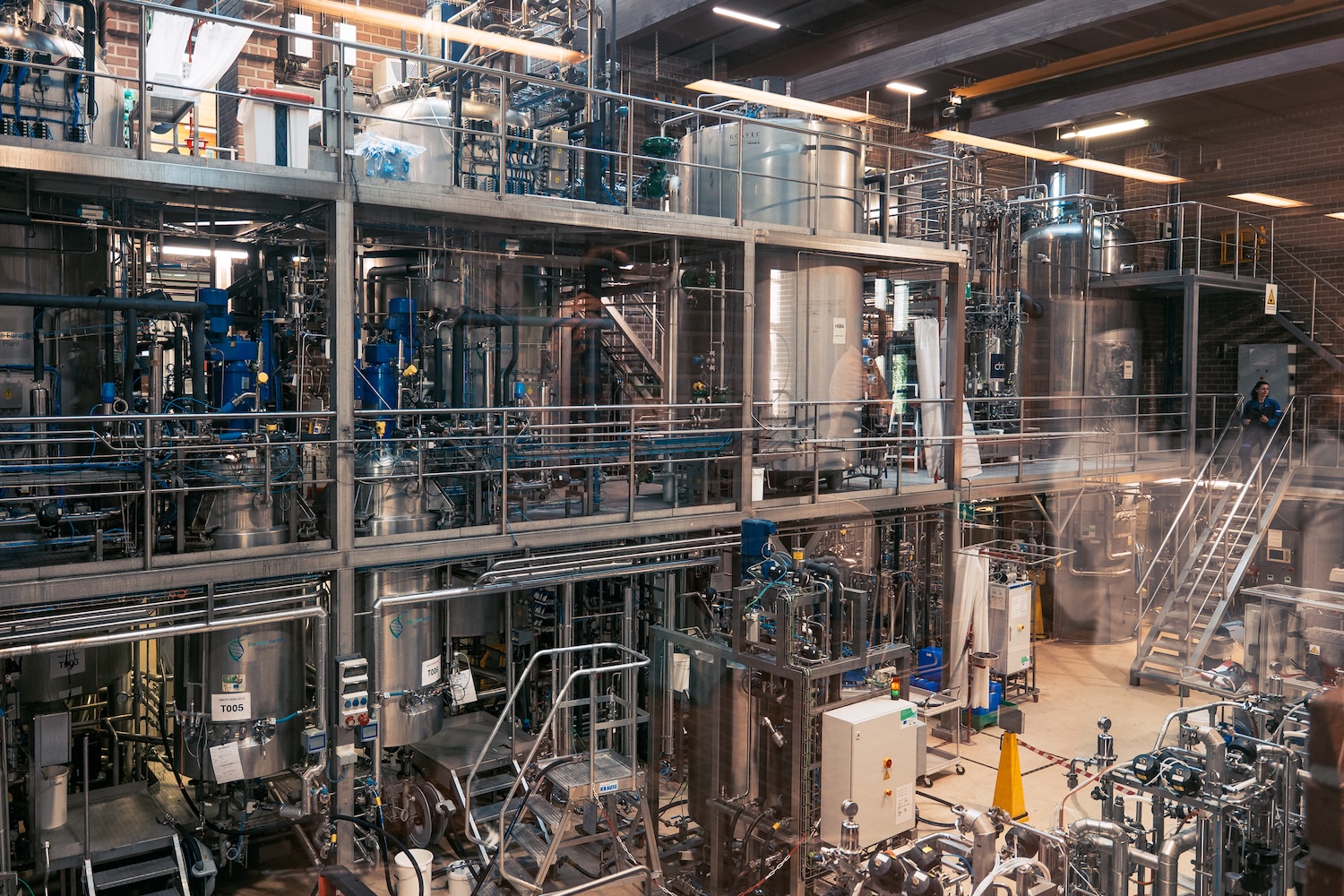
A former fire station in Ghent’s port is home to another pilot facility. Bio Base Europe Pilot Plant helps companies scale up biobased products and fermentation processes from the lab to industrial production. Because, as it turns out, scaling up fermentation takes more than buying a bigger tank. A lot can happen between a successful lab experiment and full-scale production—and not all of it according to plan.
“A process can work perfectly well in the lab and suddenly stop working at a scale of fifteen or seventy-five cubic meters,” explains bioengineer Emma Cremelie as she leads us across what used to be the firefighters’ basketball court, now packed with fifteen-cubic-meter fermentation tanks. If you’re wondering where they found room for the seventy-five-cubic-meter ones: the fire station also had its own swimming pool. Where firefighters once soaked, the future now ferments.
“Water and energy use can be minimal on a small scale,” Emma continues. “But scale things up and demand can suddenly skyrocket, making the economics much more challenging.” The same goes for purifying the final product and treating the wastewater, she adds. “Those are two more things we factor in for our clients.”
Admittedly, unless you’re a bioengineer (or harbor ambitions of joining the fire department), this may all sound essential but also, well, a little dry. But dry is decidedly not how the team at Bio Base Europe Pilot Plant presents itself, judging by its pretty hilarious spoofs of Jurassic Park and James Bond. Live and let ferment? We’ll raise a—look it up—kimchi martini to that.
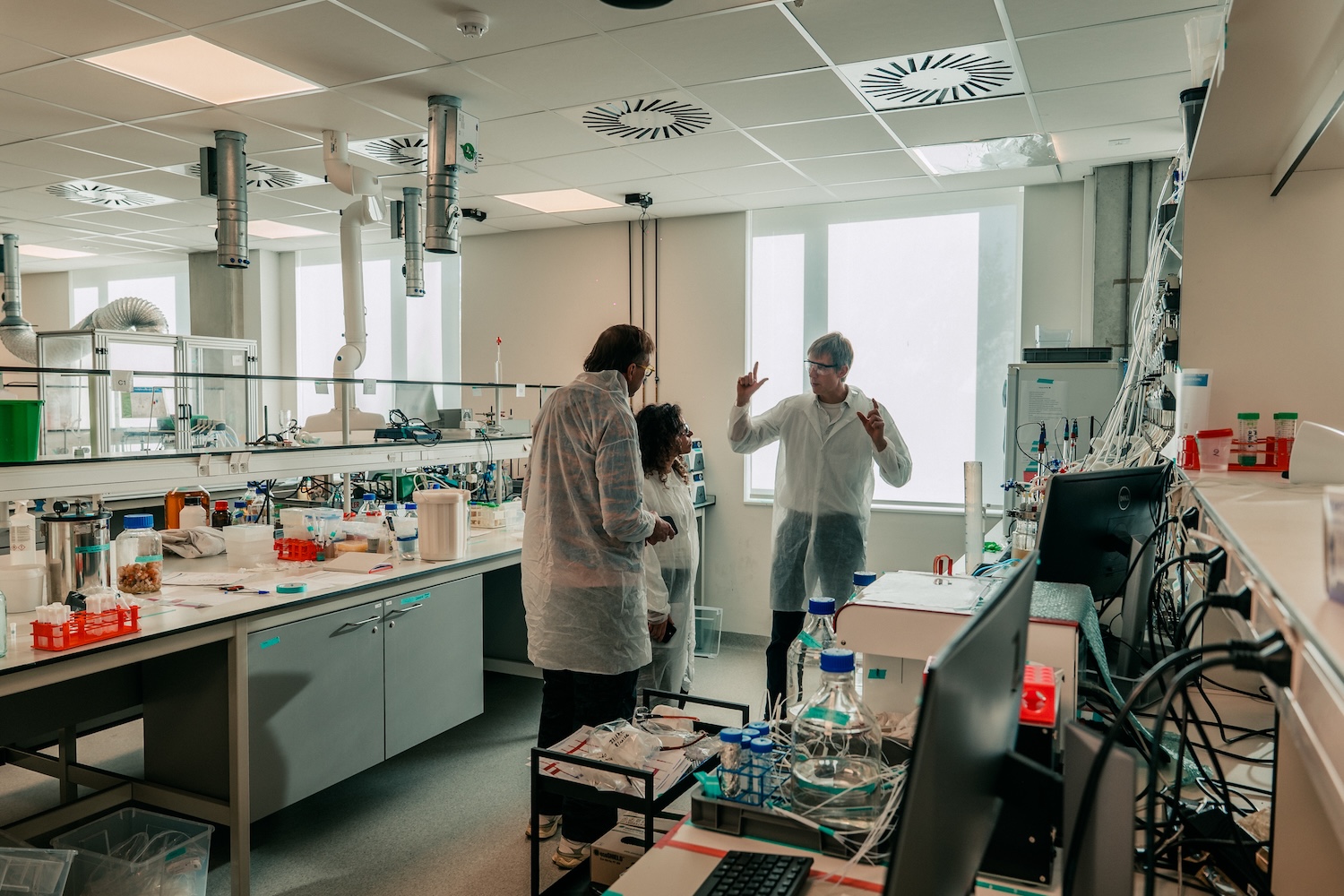
Speaking of waste—water or otherwise—there is apparently no such thing! At least, that’s how CAPTURE sees it. The research platform brings scientists and businesses together to turn residual streams, from water and CO₂ to plastics, into valuable resources.
“As scientists, we need that firsthand experience from industry,” says Jan Arends, CAPTURE’s industrial innovation manager, who’s hardly short on brainpower—he works alongside dozens of PhD researchers from around the world. “There’s no denying that Ghent and Flanders have an enormous wealth of knowledge. But making a real impact means not just building on what other researchers have learned but also understanding what businesses need.”
And those businesses certainly don’t have to be big corporations, the microbiologist stresses. “We’re also here for medium-sized companies and smaller businesses that don’t have the staff or capacity to figure out what to do with their waste.” CAPTURE doesn’t just assess and develop technologies for them. It also runs the numbers. “Companies generally don’t recycle for the sake of recycling. They look at the environmental impact, but also at whether it makes economic sense.”
Still, Arends believes we’ll no longer be able to ignore these residual streams if we want to make Europe less dependent on fossil resources. “North Sea Port’s industry currently relies on nineteen million metric tons of carbon a year, almost all of it fossil-based. If we can recover even some of that from plastic waste, we’re already making progress.”
Or take water again. After a dry summer, Belgium faces a shortage of fresh water, allowing salt water to push farther inland along the Scheldt River. “That’s bad news for industry,” Jan says, “because salt water causes corrosion. So to keep our water suitable for industrial use, we need to remove the salt, on top of the pharmaceutical residues and PFAS.”
A pinch of salt doesn’t improve everything, then.
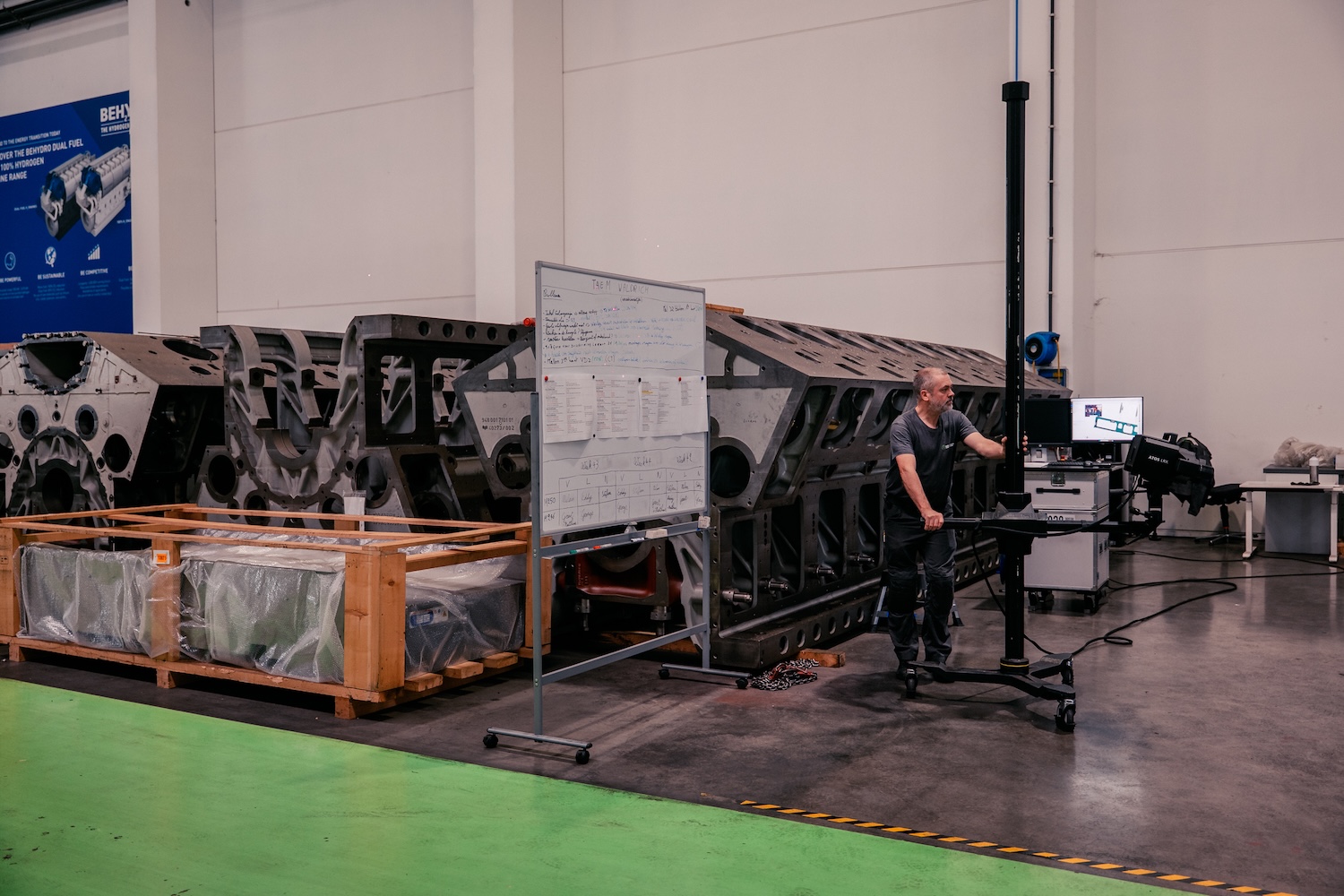
Ghent’s old Vynckier industrial site has become synonymous with nightlife icon Kompass Klub. But did you know that around eighty percent of it belongs to another local institution that doesn’t know when to stop? Anglo Belgian Corporation, better known as ABC Engines, has been designing and building engines since 1912—for ships, locomotives, and emergency generators at nuclear power plants, among other applications. The kind of engines the world runs on. And relies on.
“A car engine is pretty worn out after around 250,000 kilometers, or five thousand operating hours,” says Ewout Vandamme, who oversees mergers and acquisitions within the group. “But at that point, ours are only just getting warmed up. They go on to run for a hundred thousand hours. At least!”
What’s striking about ABC Engines is that, with more than a century of experience behind it, the company doesn’t rush to knock on other businesses’ doors. “We always ask ourselves: make or buy?” Ewout says. “And the answer is usually ‘make.’ Partly because we like to believe we can do it better—our engineers handle everything from development through production to testing. But also because we want to keep as much of our supply chain as possible within the group. We make our own turbochargers, our own emissions-reduction systems, even our own castings.”
They do still buy their phones elsewhere, he assures us. For now.
More than a century in, and in a fiercely competitive market, the enthusiasm is still unmistakable. “We recently had a request to build an engine that we ended up selling maybe two or three of,” Ewout recalls. “Was it the best decision? Economically, no. But we had fun developing it. And we certainly learned a few things along the way.”
Of course, not every business has a hundred years of experience to draw on. That’s where Blikopener, an initiative from Flanders’ thirteen university colleges, comes in. It’s also a reminder that they have more to offer businesses than interns. (Nothing against interns, obviously.)
“We find that’s what small and medium-sized businesses tend to associate us with,” says Eva Van Buggenhout of Artevelde University of Applied Sciences, “rather than practice-based research. Even though we have plenty of researchers in our ranks, too.”
So how does Blikopener work? “Entrepreneurs tell us what they’re looking for, after which we invite them in for an initial conversation. Then we figure out which institution, researchers, or even students are best equipped to help and turn their question into a concrete plan—basically, anything from straightforward advice to ongoing support and tailored research.”
And to put your inner skeptical entrepreneur at ease: yes, there’s something in it for the university colleges, too. “For us, it’s an excellent opportunity to understand what businesses need and feed that back into our courses,” Eva readily admits. A win-win, then. Ultimately, every company wants a junior employee who can type the right prompts or, er, proactively take ownership of strategic synergies.
Perhaps a concrete example? Earlier this week, an entrepreneur visited Artevelde University of Applied Sciences with reusable bricks he can’t sell for love or money. He’d hit, you might say, a brick wall. The Flemish are famously said to be born with a brick in their stomach—a national appetite for building and owning a home—but apparently we prefer our bricks fresh out of the oven.
“From a circular-economy perspective alone, it obviously makes much more sense to reuse them,” Eva says. But how to win consumers over and overcome their skepticism is what Blikopener’s wider network will now try to figure out. Because if this day has shown us anything, it’s that with the right expertise, you can get just about anything moving. Even the most immovable material of all: a Flemish mind.


We have more where that came from! Go back to the overview to discover all articles.